
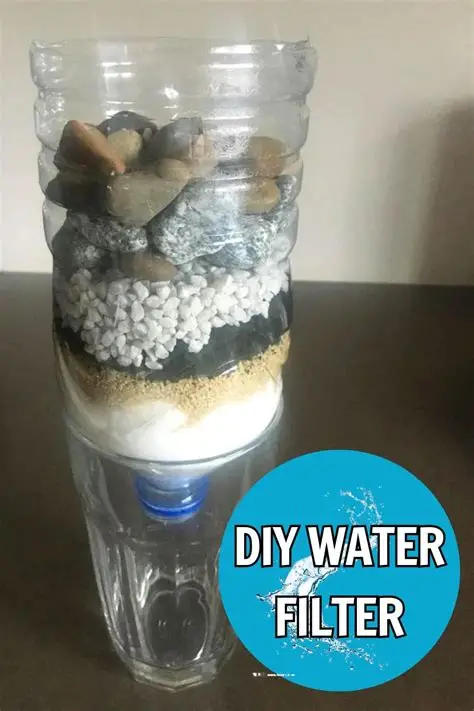
Having access to clean drinking water is essential, but not every basic filtration method makes water safe to drink on its own. A simple sand and charcoal filter can help remove some visible dirt and particles, but it should not be treated as a complete method of making contaminated water safe.
If you don’t have access to commercial filtered water, a basic filter can be constructed using a large plastic bottle or suitable container. However, additional treatment is necessary if the water is intended for drinking.
How a Basic Sand and Charcoal Filter Works
A simple homemade filter can be made from a large plastic bottle or bucket. If using a plastic bottle, the bottom can be cut off and the bottle turned upside down to create a funnel-like container.
Place a clean layer of cloth or a suitable coffee filter near the opening. Above that, add layers of small rocks or gravel, followed by clean sand and then suitable activated charcoal.
The exact arrangement can vary depending on the design, but the idea is to allow water to pass slowly through several layers that trap some suspended particles and impurities.
Place a clean container underneath the opening to collect the filtered water.
Filtration Does Not Make All Water Safe
This is the most important part of using a homemade filter: basic sand and charcoal filtration does not reliably remove bacteria, viruses, or other disease-causing microorganisms.
Water that looks clear can still contain harmful organisms.
For this reason, filtered water intended for drinking should undergo an appropriate disinfection process afterward.
Boil or Properly Disinfect the Water
If boiling is suitable for your situation, bring the water to a rolling boil and maintain it for at least one minute. At higher elevations, longer boiling may be recommended.
Another option is to use an appropriate water-purification product according to the manufacturer’s instructions.
Do not assume that simply passing water through sand and charcoal makes it safe to drink.
Consider a Permanent Water Filtration System
If you regularly need to treat drinking water at home, a properly designed commercial filtration or purification system may be a better long-term option.
Depending on the water source and the contaminants involved, different systems can provide different types of treatment. Ceramic filters, UV systems, activated-carbon filters, and other technologies have different purposes and limitations.
Before purchasing a permanent system, it is useful to understand what contaminants are actually present in your water.
A homemade filter can be useful for demonstrating basic filtration or reducing visible particles in water, but for drinking water, filtration and disinfection should be treated as separate steps.