
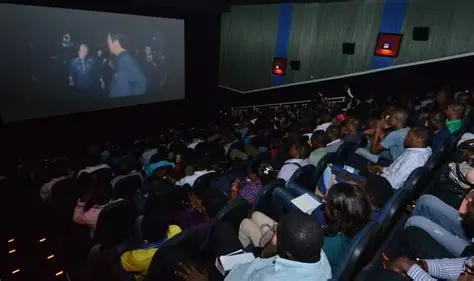
In Abuja, a growing number of young professionals are choosing private movie viewing parties instead of going to cinemas for first-weekend releases.
The format is simple: one person books a short-let apartment or uses a friend’s spacious living room, another arranges a projector or large television, and the rest contribute towards food, drinks, and other expenses.
These gatherings typically involve eight to fourteen people, with contributions ranging from ₦5,000 to ₦8,000 per person to cover the space, data, and refreshments.
For some groups, the appeal is not just the cost. It is the opportunity to watch a film without distractions, discuss it afterwards, and enjoy a more intentional social experience.
How Private Movie Nights Work in Abuja
Private viewing parties often take place in short-let apartments or larger living rooms in areas such as Asokoro, Maitama, and Wuse 2.
The group shares responsibilities. One person arranges the venue, another takes care of the screen or projector, and others contribute refreshments.
The gatherings are usually kept relatively small, with eight to fourteen participants.
Unlike ordinary house parties, the focus is deliberately placed on the film. The goal is to create an environment where people can watch closely and enjoy the experience together.
Why Phones Are Being Put Away
One distinctive feature of these gatherings is the effort to reduce distractions.
Some groups place phones in a basket at the door, while others ask participants to keep their devices on silent in another room during the film.
Discussion is saved until after the credits.
Some groups also follow informal rules: no spoilers before the screening, no talking during important scenes, and an honest round of reactions afterwards.
The result is an experience built around actually watching the film rather than treating it as background entertainment.
Afterwards, conversations may continue for an hour as participants debate plot holes, character decisions, and the story’s strongest moments.
Private Viewing Parties Versus Cinema Costs
The financial appeal is another important part of the trend.
According to the supplied account, cinema tickets, transport, and snacks can easily exceed ₦15,000 per person during a weekend outing.
By comparison, the private viewing format described here involves contributions of between ₦5,000 and ₦8,000 per person.
The actual cost depends on the venue, refreshments, number of participants, and the equipment available.
For groups that already have access to a suitable living room or television, the arrangement may be particularly convenient.
However, private screenings still involve costs and require an appropriate venue and a lawful way to access the film.
The Importance of Legal Streaming Access
The viewing-party format described in the supplied information includes shared legal streaming accounts.
Organisers should ensure that the service’s terms permit the intended use and that the film can be accessed legally in their location.
A private gathering should not rely on unauthorised copies simply because the event is informal.
Planning the screening around lawful access helps participants enjoy the film without creating unnecessary copyright problems.
How Movie Nights Are Creating Smaller Social Circles
These gatherings can also help participants build more consistent social relationships.
People who meet regularly to watch films may begin sharing recommendations, professional contacts, and sometimes investment ideas.
One group that initially focused on Marvel movies has reportedly watched three Nollywood titles in a row after a member argued that the storytelling deserved more attention.
Another group has started inviting one carefully chosen new person each month, allowing the circle to expand gradually without losing its intimate atmosphere.
The experience shows how a shared interest can become a foundation for lasting social connections.
Why Nollywood Is Finding a Place in Private Screenings
The supplied account describes groups increasingly making room for Nollywood films alongside international releases.
For organisers, this creates an opportunity to explore different styles of storytelling and discuss films that might otherwise receive less attention in their regular viewing habits.
A private screening also gives participants more time to discuss characters, performances, and storylines after the film ends.
For filmmakers and audiences, these small gatherings can be another way of encouraging interest in cinema beyond the conventional multiplex experience.
Are Private Viewing Parties Replacing Cinemas?
Private viewing parties are not necessarily replacing every cinema visit.
Major opening weekends and large releases still attract audiences who enjoy the atmosphere of a public cinema.
However, the private format can appeal to people watching mid-tier releases or films they want to discuss closely with friends.
The experience is more controlled, more intimate, and potentially less expensive.
In a city where social activities can sometimes feel performative, sitting in a living room with people who genuinely pay attention to the film has become an alternative that some viewers prefer.
Private movie viewing parties are emerging as a different way for some young professionals in Abuja to enjoy entertainment.
With small groups, shared costs, legal streaming access, and a deliberate focus on the film, the format offers an alternative to traditional cinema dates.
Whether the gathering takes place in Asokoro, Maitama, or Wuse 2, its appeal lies in the combination of affordability, attention, and social connection.
Cinemas will continue to have their place, but private viewing parties offer a more personal option for people who want to watch closely and talk about what they have seen.