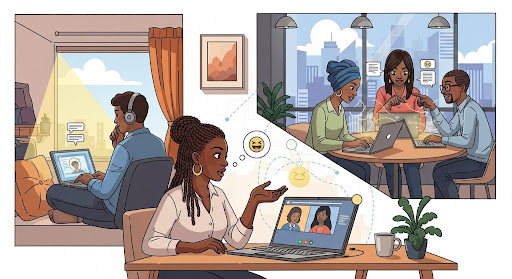
Remote work is no longer something companies introduce only when circumstances force them to. It has become a major part of the modern workplace, with businesses and professionals continuing to adjust to a working environment that is increasingly digital and flexible.
What started for many workers as simply “working from home” has grown into something much bigger. Companies are now experimenting with hybrid arrangements, flexible working hours and digital collaboration systems that allow employees to work effectively without being in the same physical office every day.
For Nigerian professionals, this shift is particularly significant. Remote jobs can make it possible to work with companies outside their immediate location, giving skilled workers access to opportunities that may previously have required relocation.
Remote Jobs Are Opening Doors Beyond Location
One of the biggest attractions of remote work is the ability to separate employment opportunities from geographical boundaries.
A professional living in Lagos, Abuja, Ibadan or another Nigerian city can potentially work for a company operating in another state or country without moving. For people with skills in technology, customer support, digital marketing, writing, design, software development and other online professions, this has created a much wider job market.
However, getting a remote job is not simply about having internet access and a laptop.
Employers are paying close attention to how candidates communicate, organise their work and handle responsibilities without someone physically standing over them.
Companies Want Workers Who Can Deliver Without Constant Supervision
Working remotely offers flexibility, but that flexibility comes with responsibility.
In a traditional office, managers can easily see when employees arrive, attend meetings or work at their desks. Remote teams do not operate in exactly the same way. As a result, employers increasingly have to measure performance through completed tasks, communication, deadlines and overall results.
This means remote workers need to be comfortable managing their own schedules and taking responsibility for their workload.
Clear communication has also become extremely important. A worker who is technically skilled but consistently misses messages, fails to provide updates or struggles to meet deadlines can quickly become a problem for a remote team.
Hybrid Work Is Becoming a Middle Ground
While fully remote work continues to attract professionals, many companies are also turning to hybrid arrangements.
Hybrid work combines remote working with periods of physical collaboration in an office. Depending on the company, employees may spend certain days working from home and others at the workplace.
For employers, the model can provide a balance between flexibility and face-to-face interaction. Employees, meanwhile, can enjoy some of the freedom of remote work without completely losing the opportunity to collaborate with colleagues in person.
The success of hybrid work, however, depends heavily on how well a company organises its teams and communicates expectations.
Digital Skills Are Becoming More Important
The changing workplace is also affecting the skills employers look for when hiring.
Technical knowledge remains important, but remote professionals increasingly need a combination of digital and personal skills. Being able to communicate online, manage time, solve problems independently and adapt to new tools can make a significant difference.
Emotional intelligence is also becoming valuable because working remotely can sometimes make communication more difficult. Employees need to understand how to work with people they may rarely meet physically and resolve misunderstandings through digital communication.
For Nigerian workers hoping to compete for international opportunities, building these skills can be just as important as updating a CV.
Employers Face New Challenges Too
Remote work is not only changing the lives of employees. Companies have had to rethink how they manage people.
Businesses with distributed teams need reliable communication and collaboration systems. They also have to consider cybersecurity, employee wellbeing, productivity and how managers can maintain a healthy relationship with workers who are not physically present.
Trust has become another important issue.
A company cannot successfully operate a remote team by treating every employee as though they are under constant surveillance. Instead, many modern workplaces are moving towards systems where expectations are clearly defined and employees are judged primarily by their performance.
What the Future of Work Could Look Like
The workplace is unlikely to return completely to the way it operated before remote and hybrid work became widespread.
Instead, companies and workers are likely to continue experimenting with different combinations of office-based and remote employment.
For professionals, this means flexibility may become an increasingly important part of the job search. At the same time, competition for attractive remote positions could remain high because a single vacancy may attract applications from professionals across different locations.
Workers who want to remain competitive will therefore need to keep developing their skills, improving their digital communication and becoming comfortable with new ways of working.
For Nigerians looking to enter the remote job market, the opportunity is real, but preparation matters. A strong skill set, reliable internet access, good communication, discipline and the ability to work independently can go a long way when competing for flexible roles.